
Daily Rituals How Artists Work - Introduction
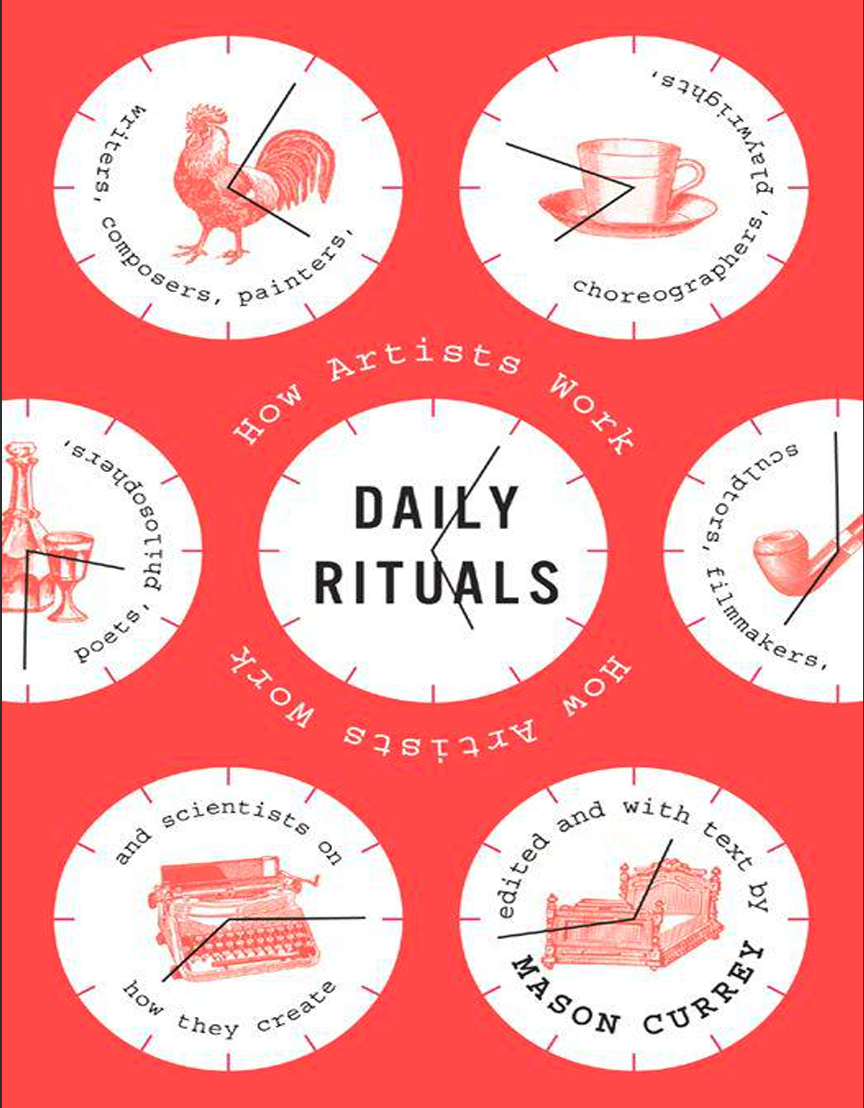
Daily Rituals How Artists Work (Mason Currey)
How It Started
I came across this book while doing further reading from an article translated by Jarrett Ye, Cultivating Depth and Stillness in Research - Zhihu [^zhihu]

The mistaken expectation is believing that progress should always be swift and constantly rewarding, and then spiraling into fear and self-doubt when you feel you’re not at your best
What This Book Is About
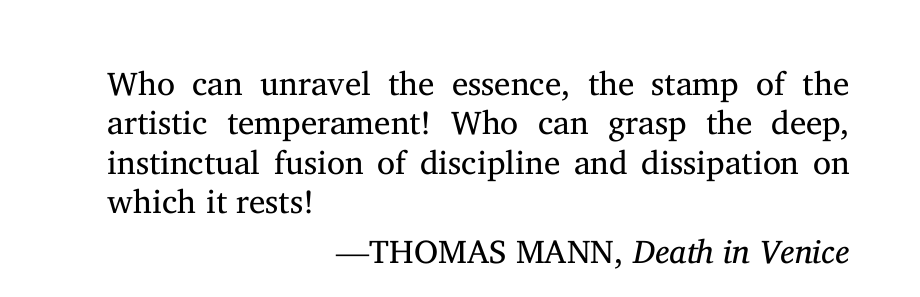
Epigraph: “Who could reveal the essence and mark of the artistic temperament, Who could comprehend that profound and instinctive union, the balance struck between discipline and abandon!”?Thomas Mann, Death in Venice
As mentioned above, this book collects the daily schedules and specific activities of many remarkable figures, such as
Karl Marx, Author of Das Kapital, founding thinker of modern communist thought
Friedrich Nietzsche, Known for the philosophical work Thus Spoke Zarathustra
Ludwig van Beethoven, Hailed as the “Saint of Music,”his Symphony No. 9 is widely known
Albert Einstein, Not only a scientist, but also known for his distinctive way of life
Ernest Hemingway, Author of The Old Man and the Sea, Nobel Prize in Literature laureate
Franz Kafka, Renowned for The Metamorphosis and absurd literature
This helps with reflecting on one’s own time management. Their extraordinary achievements lend a certain authority to their methods, and besides, reading these anecdotes in your spare time is genuinely entertaining
Nearly every weekday morning for a year and a half, I got up at 5:30, brushed my teeth, made a cup of coffee, and sat down to write about how some of the greatest minds of the past four hundred years approached this exact same task—that is, how they made the time each day to do their best work, how they organized their schedules in order to be creative and productive. By writing about the admittedly mundane details of my subjects’ daily lives—when they slept and ate and worked and worried—I hoped to provide a novel angle on their personalities and careers, to sketch entertaining, small-bore portraits of the artist as a creature of habit.
Why This Book
My first semester of college was wrapping up, and while I enjoyed more freedom, I also desperately felt the need for self-management skills. I tried looking for methods to learn from, but the information entropy on the internet is absurdly low, the same trite techniques everywhere, yet it’s hard to know if anyone has actually followed through or what the results were. Instead, all you find are course-selling pitches. While continuing to experiment with those methods, I also hoped that the cases from predecessors in this book could broaden my thinking
But it’s important to note that these aren’t meant to be simply copied. We need to account for the difference in eras, past practices may have limitations when applied today, especially now that we live in a digital information society with far more efficient tools and methods available. That doesn’t mean reading about these things is less valuable, though. When people share their own method summaries, they often say, “There are countless methods out there, choosing what suits you is what matters best.”I want to add something for many people at the same time: “Although methods can’t be directly copied, the principles are universally applicable.” I hope that when you read, you can also distill the reasons behind the success of these practices and build your own models, that’s the approach that truly works
Also, I wanted to read and accumulate from the original English text, being able to connect learning with material I’m genuinely interested in. I personally find that learning anecdotes is a kind of refined pleasure; the thought of being able to tell celebrity stories to others in the future makes me want to collect them all. Not only that, but the original prose is brilliant, it rewards multiple readings
After reading a bit more, I felt an even stronger need to recommend it to everyone, because it practically nailed my own situation
In reality, most of the people in this book are somewhere in the middle—committed to daily work but never entirely confident of their progress; always wary of the one-off day that undoes the streak.
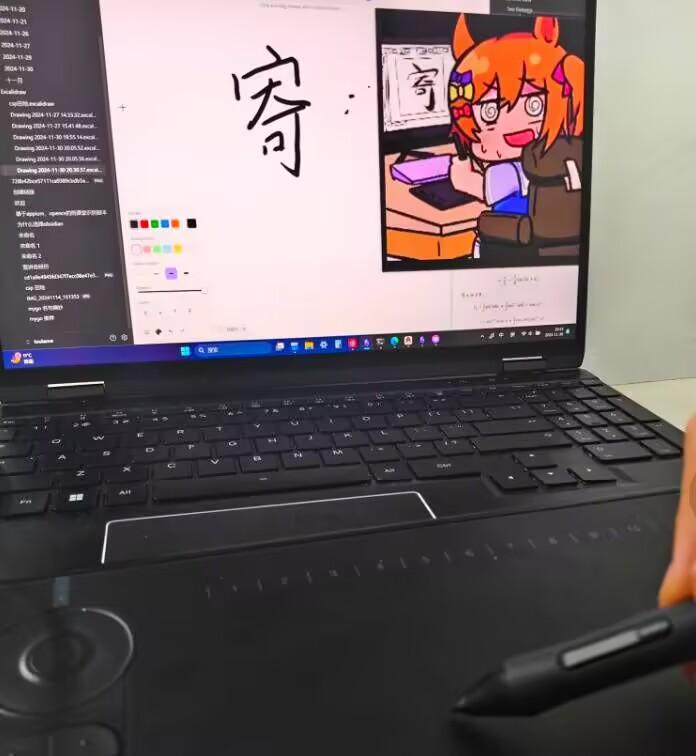
When I made up my mind to rearrange and plan my study time, I pulled this together from my Obsidian journal vault, by mid-December I hadn’t written a single entry. Every day was just a daily disaster log
That was November 30th, I was helping a classmate with a question but copied it wrong, and when I couldn’t solve it, I wrote a big “GG”on the page. Little did I know that was prophetic, shortly after, I caught the flu, slept through three groggy days, and my rhythm was completely shattered
After that, I forgot what I was supposed to do each day. My biological clock was a mess, my sleep was poor, and I couldn’t focus on anything. Anxiety, staying up late, giving up, a perfect negative feedback loop, until December 19th when I finally started re-planning and using my time again
(Of course, the fact that any disruption can derail your work rhythm is indeed a problem, after reflection, I’ve started trying to use daily and weekly checklists)
Sharing
I trained ChatGPT to translate the original text in a style that is (primarily reflective in tone, logically clear, attentive to layers and detail, while quoting famous sayings or classical theories to add depth to the expression), and I maintained the format of [potentially unfamiliar vocabulary (beyond the 3,500-word gaokao[^gaokao] range)], [concept introductions (beyond common university student knowledge)], and [translation (paragraph-by-paragraph bilingual comparison)], this not only enables vocabulary accumulation but also broadens cultural horizons and promotes English reading and writing
An example from proofreading:
In that sense, this is a superficial book. It is about the circumstances of creative activity, not the product; it deals with manufacturing rather than meaning.
ChatGPT translated “superficial“ as [ㄩ, surface-level], but I think “ゆ/shallow” is a better translation
ChatGPT: Using the translation “ㄩ”, In that sense, this is a “ㄩ” book. It concerns itself with the circumstantial conditions of creative activity, not the work itself; it focuses on the manufacturing process of creation, not its meaning.
Pros:
Neutral and accurate: Compared to “ゆ,” “ㄩ” is more neutral and better expresses the author’s intent of stating a fact rather than making a critique.
Fits the context: The following text mentions the book focuses on “circumstantial conditions” rather than “meaning” — “ㄩ” better reflects this objective descriptionMe: But “ㄩ” is rarely used and hard to understand. Plus, the author calling their own book “ゆ” — that kind of self-deprecating humor is actually quite charming
ChatGPT: You make an excellent point! In the Chinese context, “ゆ” is indeed more common and easier to understand, and it better conveys the author’s self-deprecating humor and lighthearted tone. Using “ゆ” not only aligns with the original semantics but also adds playfulness and makes it more relatable to readers
Me: I want you to keep optimizing your translations the way we discussed “superficial” being better translated as “ゆ”
ChatGPT: Understood! I’ll continue refining the translations, paying attention to details and natural expression to better meet your expectations. Feel free to let me know if you have other preferences or needs
Of course, this is just my own taste. After all, there’s a line in the original that goes:
John Cheever thought that you couldn’t even type a business letter without revealing something of your inner self—isn’t that the truth?
If you happen to like this style too, that’s the best
Here’s to wriggling through.
That’s all
[^zhihu]: Zhihu (知乎) is China’s largest Q&A platform, often called “the Chinese Quora” — but with longer, more essay-style answers and a stronger culture of in-depth knowledge sharing.
[^gaokao]: The gaokao (高考) is China’s national college entrance examination. The “3,500-word range” refers to the official vocabulary list for the English section of the gaokao, essentially the baseline English vocabulary expected of Chinese high school graduates.